
How to Flush a Water Heater and How Often a Fair Oaks Home Should
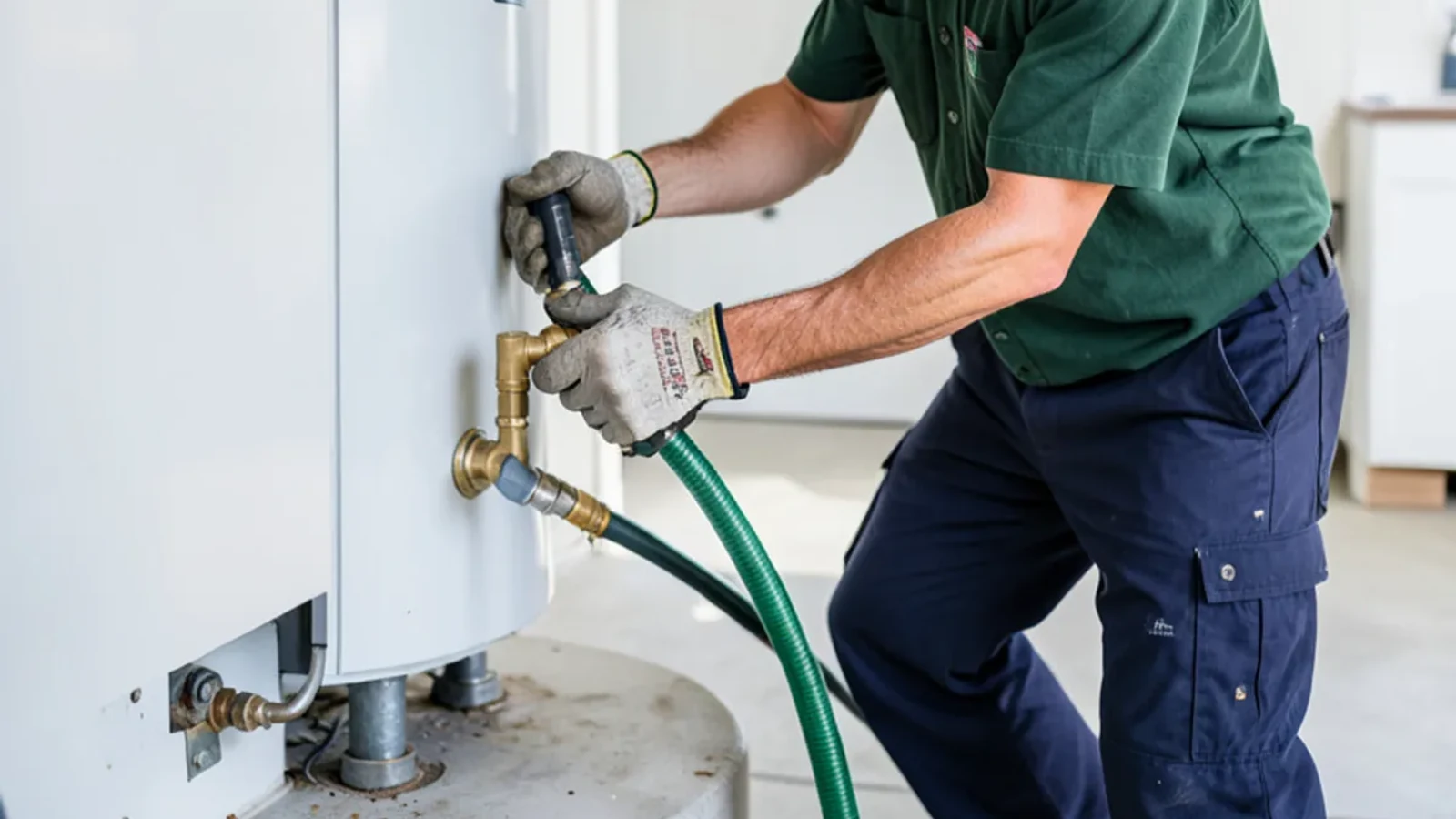
To flush a water heater in Fair Oaks, shut off the gas control or electrical breaker, close the cold water supply valve, attach a heat-rated garden hose to the bottom drain valve leading outdoors, open an upstairs hot water faucet to break vacuum suction, and open the drain valve until the discharge runs crystal clear. In Fair Oaks, where seasonal groundwater well blending increases water hardness to 5 to 9 grains per gallon (GPG), storage tank water heaters must be flushed once every 12 months—or every 6 months if popping noises occur during heating cycles.
Learn how to flush a water heater in Fair Oaks, CA to drain hard mineral sediment, prevent burner rumbling, and protect your tank. Call (207) 419-2600.
- ✓Heavy-duty heat-rated garden hose (minimum 5/8-inch diameter, 25-50 ft)
- ✓Flathead screwdriver or adjustable pliers to turn the drain valve stem
- ✓Bucket or exterior landscape discharge area that withstands 125-degree water
- ✓Work gloves and eye protection to guard against scalding water vapor
- ✓1-1/16-inch deep socket wrench and breaker bar (if inspecting the anode rod)
- ✓Teflon thread sealing tape and replacement brass caps for the drain outlet
| Maintenance Schedule | Sediment Layer Thickness | Heating Efficiency Loss | Tank Lifespan Expectation | Risk of Tank Floor Failure |
|---|---|---|---|---|
| Annual Flushing (Recommended) | Under 0.25 inches (soft) | 0% to 3% baseline | 12 to 15+ years | Extremely Low |
| Bi-Annual Flushing (Every 2-3 Yrs) | 1.0 to 2.5 inches (dense) | 8% to 15% increase in energy | 8 to 10 years | Moderate (anode rod depleted) |
| Neglected Tank (5+ Years) | 3.0 to 6.0+ inches (calcified) | 25% to 40% efficiency drop | 5 to 7 years (premature leak) | High (kettle popping, floor rupture) |
Need a Fair Oaks Plumber on Site?
Call (207) 419-2600 to talk directly with our team at 10100 Fair Oaks Blvd.
Why water heater flushing is critical in Fair Oaks
Water supplied across Fair Oaks is sourced through a seasonal blend of surface water and deep groundwater wells managed by Fair Oaks Water District and San Juan Water District. Surface water from Folsom Lake is naturally soft, but groundwater drawn from regional aquifer wells carries dissolved minerals, producing composite hardness ratings typically measuring between 5 and 9 grains per gallon (GPG). As your residential water heater heats incoming cold water above 120 degrees Fahrenheit, dissolved calcium and magnesium carbonates precipitate out of solution, settling onto the steel bottom head of the tank. Over twelve to eighteen months without a purge, this sediment accumulates into a dense crust several inches thick. This mineral layer acts as an insulating blanket between burner and water, forcing the burner to fire longer to satisfy temperature demands. In addition to driving up utility bills, trapped heat overheats the steel bottom head, causing microscopic thermal fractures in the interior glass lining.
The complete 7-step procedure for a safe homeowner flush
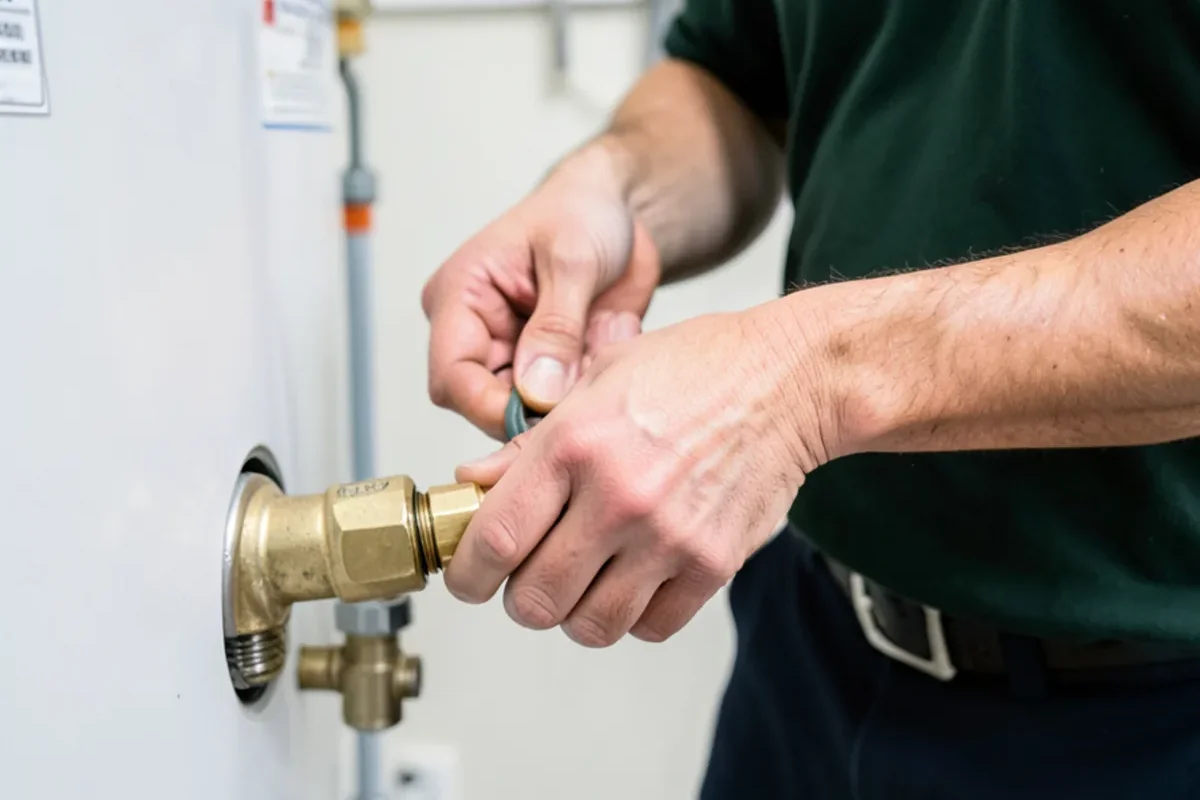
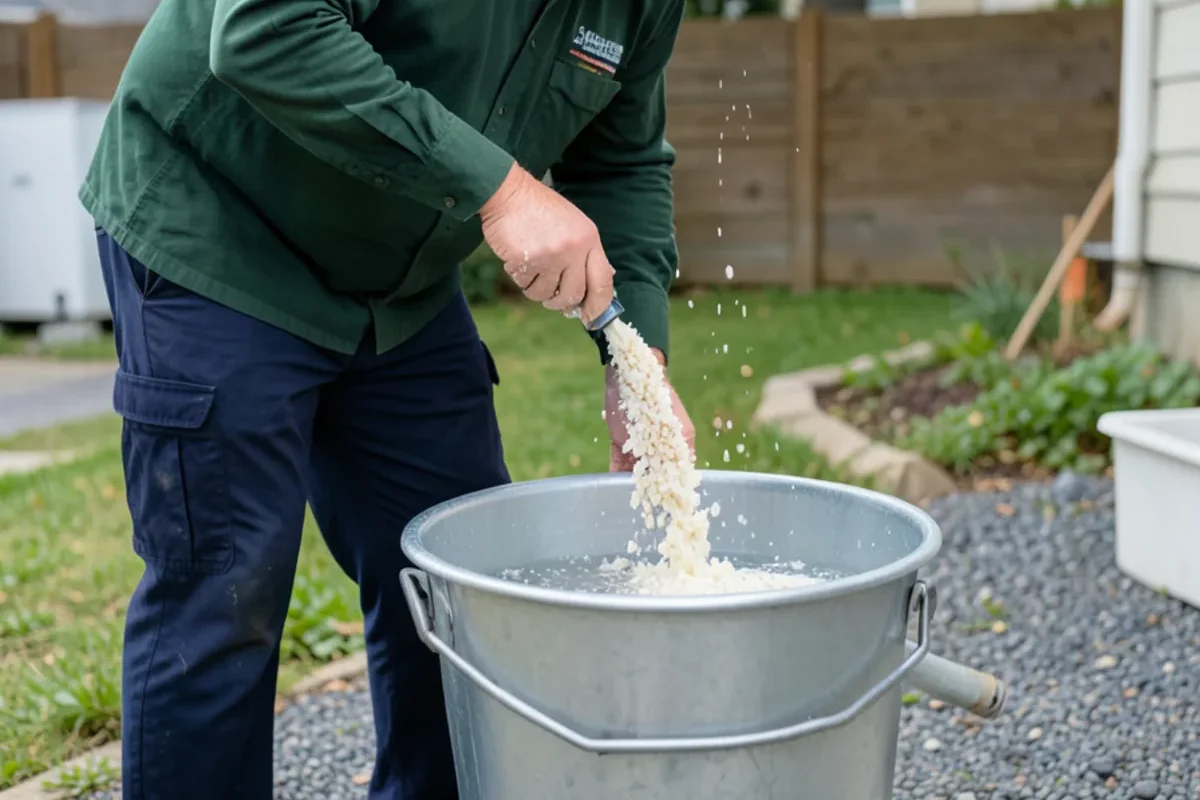
Flushing your water heater safely requires following strict procedural steps to prevent water damage, scalding burns, and electrical heating element burnout. Step 1: Turn off the heat source completely. For standard natural gas water heaters, rotate the temperature dial on the gas control thermostat down to the PILOT or VACATION setting. For electric water heaters, shut off the dedicated double-pole 30-amp circuit breaker in your main electrical service panel. Step 2: Shut off the cold water supply valve located on the incoming cold pipe at the top right of the heater. Step 3: Connect a heavy-duty, heat-rated garden hose to the drain valve threaded outlet at the base of the tank. Run the opposite end of the hose outdoors to a driveway gutter, storm drain, or landscaped area that can tolerate hot discharge water. Step 4: Open a hot water faucet in a nearby upstairs bathroom or laundry room; this introduces atmospheric air into the plumbing system to break internal vacuum suction, allowing the water to drain freely. Step 5: Open the tank drain valve slowly and observe the water discharging from the hose. Initial runoff is frequently discolored and laden with white or tan calcium carbonate sediment flakes. Step 6: Once the tank is nearly empty, open the cold water inlet supply valve in short 15-second bursts; this turbulent incoming cold water agitates the sediment bed on the tank floor and forces stubborn mineral chunks out through the drain hose. Continue until the water discharges completely clear. Step 7: Close the drain valve tightly, disconnect the hose, and turn on the cold water supply valve to refill the storage tank completely. Keep the upstairs hot water faucet open until water flows steadily without sputtering air pockets. Only after the tank is 100 percent filled with water should you restore electrical power or turn the gas thermostat back to your desired temperature setting (recommended at 120°F).
Sacrificial anode rod inspection and replacement schedule
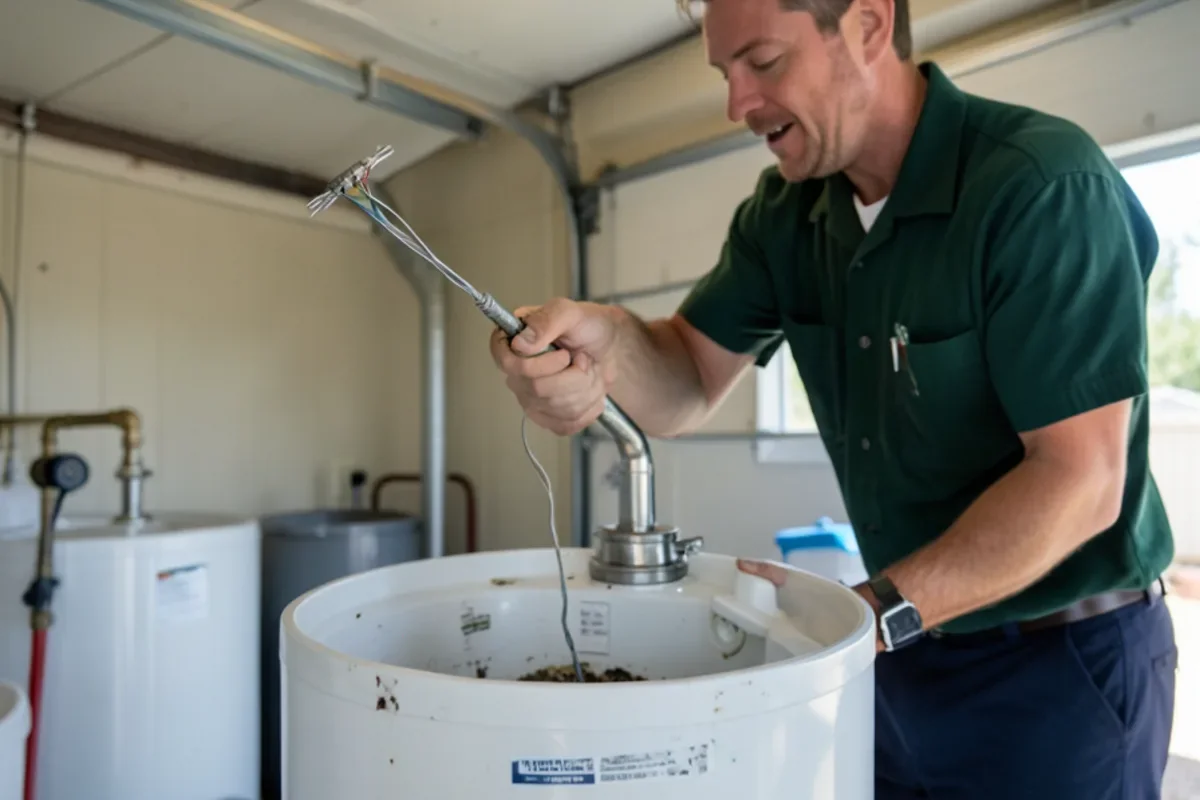
The sacrificial anode rod is the primary mechanical defense protecting your water heater tank against corrosive destruction. Threaded into the top of the tank, the anode rod consists of magnesium or an aluminum-zinc alloy wrapped around a central structural steel core wire. Because magnesium is electrochemically more active than the steel tank cylinder, corrosive galvanic currents attack the anode rod first, dissolving the sacrificial alloy while preserving the tank walls. In Fair Oaks, where mineral conductivity in the water fluctuates between surface and groundwater pumping cycles, sacrificial anode rods generally deplete within three to five years. Once the sacrificial alloy is entirely eaten away, galvanic corrosion shifts immediately to exposed steel welds, seams, and fittings inside the tank. During an annual tank flush, inspecting the anode rod using a 1-1/16-inch deep socket wrench gives homeowners direct insight into tank health. If more than six inches of the central steel wire core is exposed, or if the rod has thinned to less than half its original diameter, replacing the anode rod immediately restores cathodic protection and can double the total lifespan of the appliance.
Diagnosing severe sediment damage: popping sounds and thermal stress
Homeowners in Fair Oaks frequently ask about unusual noises emanating from their water heater closet or garage utility alcove. If you hear loud popping, crackling, banging, or rumbling sounds whenever the burner ignites, sediment accumulation inside the tank has already reached a severe threshold. These noises are not electrical malfunctions; they are physical steam cavitation shocks. As a dense layer of calcium carbonate crust forms across the tank bottom, water becomes trapped in small microscopic pockets beneath the mineral scale. When the gas burner fires, the steel plate reaches temperatures exceeding 400 degrees Fahrenheit, causing this trapped water to boil instantly into high-pressure steam bubbles. As the steam bubbles force their way upward through the compacted sediment layer, they collapse violently upon contacting cooler water above, producing sudden hydraulic shockwaves that sound like popping popcorn or boiling tea kettles. If left unaddressed, these violent pressure spikes degrade the tank bottom weld seams, shatter brittle interior porcelain glass enamel, and eventually cause unrepairable tank floor rupture.
When homeowner flushing becomes risky: stuck valves and older tanks
While regular annual maintenance is straightforward, attempting to flush an older water heater that has been neglected for five, seven, or ten years carries substantial operational risks. Many mass-market builder-grade water heaters installed across Sacramento County subdivisions were manufactured with inexpensive composite plastic drain valves. Under prolonged exposure to heated minerals, these plastic stems become brittle and calcify shut. Applying heavy wrench torque to a stuck plastic valve frequently shears the valve body off at the tank threads, causing hundreds of gallons of pressurized hot water to flood the garage or utility closet. Furthermore, in severely neglected tanks, hardened mineral sediment may actually be plugging pre-existing corrosion pits in the steel cylinder; aggressively breaking up the scale bed during a flush can suddenly open up an active leak that cannot be sealed. If your Fair Oaks water heater is more than eight years old, has never been flushed, or is equipped with a plastic drain valve, we strongly advise having a licensed plumbing professional perform a controlled assessment, install a heavy-duty full-port brass drain valve, and verify tank integrity safely.
"In our Fair Oaks service calls along Fair Oaks Blvd and Sunset Ave, we routinely see water heaters fail at year seven simply because the factory plastic drain valve clogged with calcium and the homeowner stopped flushing. Replacing that plastic valve with a 3/4-inch full-port brass ball valve during an initial maintenance visit makes future flushes effortless and prevents premature tank replacement."
— Fair Oaks Plumbing Services Field Operations Team
Frequently Asked Questions
How often should a Fair Oaks water heater be flushed?
Once every 12 months is the baseline recommendation for homes in Fair Oaks. Because water drawn from local Fair Oaks Water District and San Juan Water District sources carries 5 to 9 grains of hardness per gallon, mineral deposits form faster than in soft-water regions. If your household uses high volumes of hot water or you hear faint popping sounds, flushing every 6 months preserves heating efficiency.
What should I do if my water heater drain valve won't open or starts leaking?
Never force a stuck plastic drain valve with excessive force or long pliers, as the brittle composite material can shear off at the tank fitting. If the valve refuses to turn or drips continuously after closing, screw a brass garden hose cap with a rubber washer onto the threaded outlet as an emergency stop. Then contact a licensed plumber to replace the faulty drain assembly with a durable brass ball valve.
Can flushing an old, neglected water heater cause it to start leaking?
Yes, in older water heaters that have never been maintained for 8 to 10 years, heavy mineral sediment and rust scale can act as a temporary plug over internal micro-fissures in the steel tank. Flushed sediment may reveal an existing rust-through point. If your tank is over 10 years old and has never been serviced, have a professional evaluate the unit before performing a pressurized flush.
Is the flushing procedure different for tankless water heaters in Fair Oaks?
Yes, completely different. Tankless water heaters do not store water; instead, mineral scale deposits inside the tight copper heat exchanger coils. Tankless units must be descaled using a submersible utility pump, two washing machine hoses, and three to four gallons of food-grade virgin white vinegar or specialized descaling solution circulated through isolation service valves for 45 to 60 minutes once per year to maintain full flow and efficiency.
Plumbing Services in Fair Oaks Technical Team
Fair Oaks Plumbing Services • Local Plumbing Contractor
Physical shop: 10100 Fair Oaks Blvd, Fair Oaks, CA 95628
Related Plumbing Services
Nearby Communities Served
Questions About This Guide?
Call (207) 419-2600 to discuss your home's water heater or plumbing system with our local plumbers.